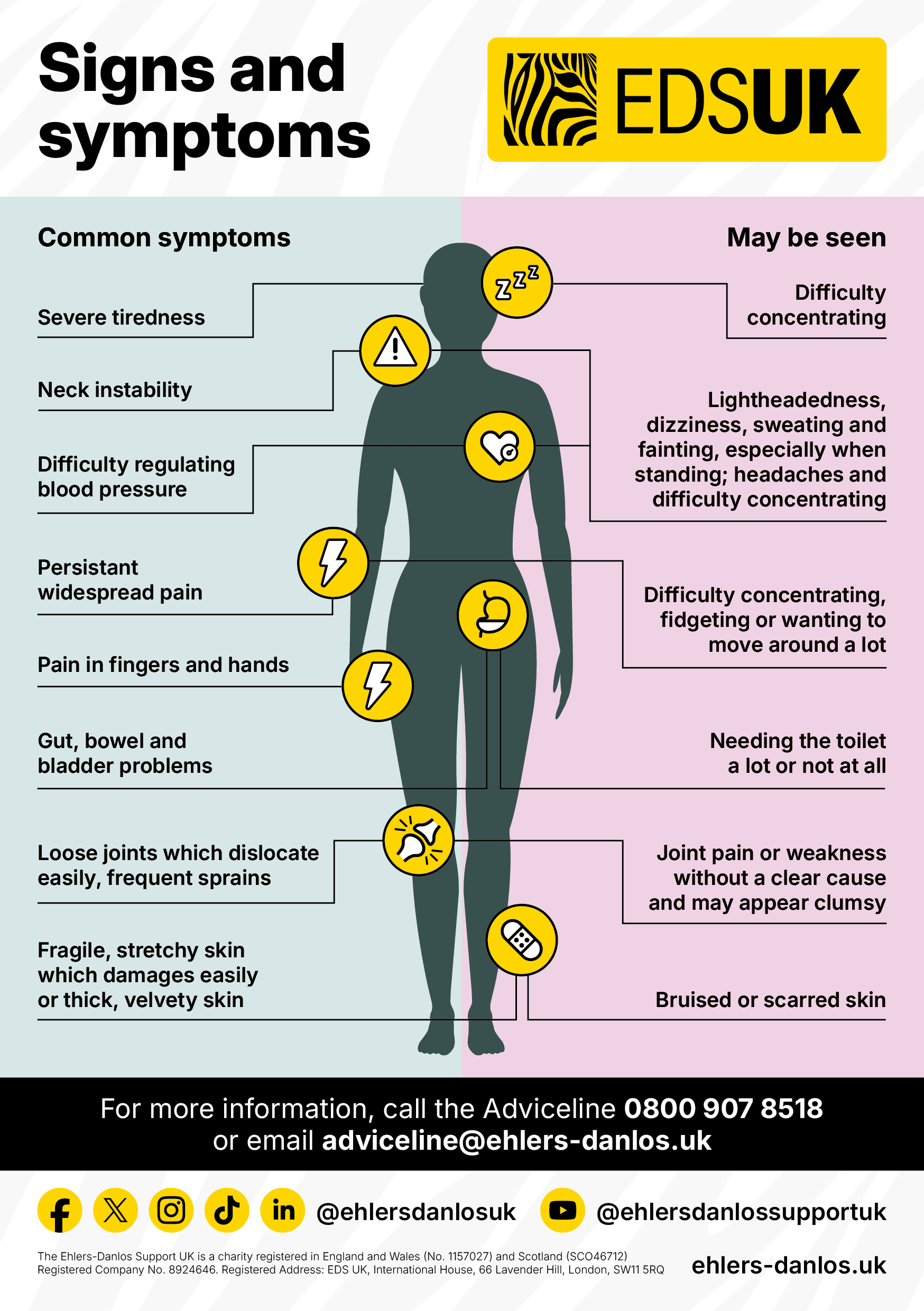
It can be tempting to dismiss reports of pain from a pupil or parent/carer because pain does not always have visible external signs. Pain is extremely complex and can have sensory and physical causes. Being disbelieved can lead to frustration, discourage reporting of pain and undermine trust and the communication needed to successfully navigate supporting the pupil.
It is important to defer to medical professionals and not to reject a pupil’s self-assessment- “toughing it out” without medical advice is not advised. Where there is no obvious sign of injury, determining whether injury is present is for medical professionals; it is important to collaborate with parents and health professionals so pupils develop a healthy and supportive approach to dealing with pain.
Pupils with EDS and HSD should have ready access to the first aid room for when they need help managing their pain or they could be allowed to carry a mobile phone for silent medication alerts. Ideally, they will have a pain management plan in place at school. This might include being allowed to leave lessons to take medication as required or having a system to alert the teacher (using cards) if they need to leave a lesson due to feeling unwell.
Pacing
Pacing is an important part of the self-management of EDS and HSD and can help with fatigue and pain. Effective pacing helps to avoid a boom and bust cycle of energy and fatigue and can enable the pupil to do more. Various techniques can be used.
Working with a traffic light system can help to manage this well. Dividing activities into three categories depending on the level of energy they take creates a ‘traffic light system’. Green is for easier tasks, such as eating lunch. Amber are tasks which take a bit more physical or mental energy, for example writing for a long time or doing a short exam or test. Red tasks take a lot of energy, for example a PE lesson. These tasks are very personal to each individual and can be adjusted as such. There should only be one red task a day as these need time to recover from.
School Uniform
Some pupils may need some flexibility in what they are allowed to wear for school if there is a uniform. For example, braces worn to stabilise joints may be difficult to fit under school trousers or shirts; boots rather than shoes may be needed to support unstable ankle joints. Some pupils may need to wear orthotics (insoles) in their shoes.
Supportive or compression garments (worn under clothes) are also increasingly being used by people with EDS and HSD. These are useful as they seem to help to improve the sense of where the limbs are in space (proprioception) and may help with other symptoms related to blood circulation.
In this video you can listen to Leo speak about school and his hypermobility