Barriers, Adjustments and Outcomes
There is a downloadable, printable pdf of this page here
A practical guide for supporting pupils with Ehlers-Danlos syndromes (EDS) and Hypermobility Spectrum Disorder (HSD)
Audience: SENCOs, teachers, teaching assistants, pastoral teams, school leaders and college staff.
How to use this guide
EDS and HSD affect every pupil differently. No two pupils will be affected in the same way. Support should always be based on the individual child’s needs rather than their diagnosis alone.
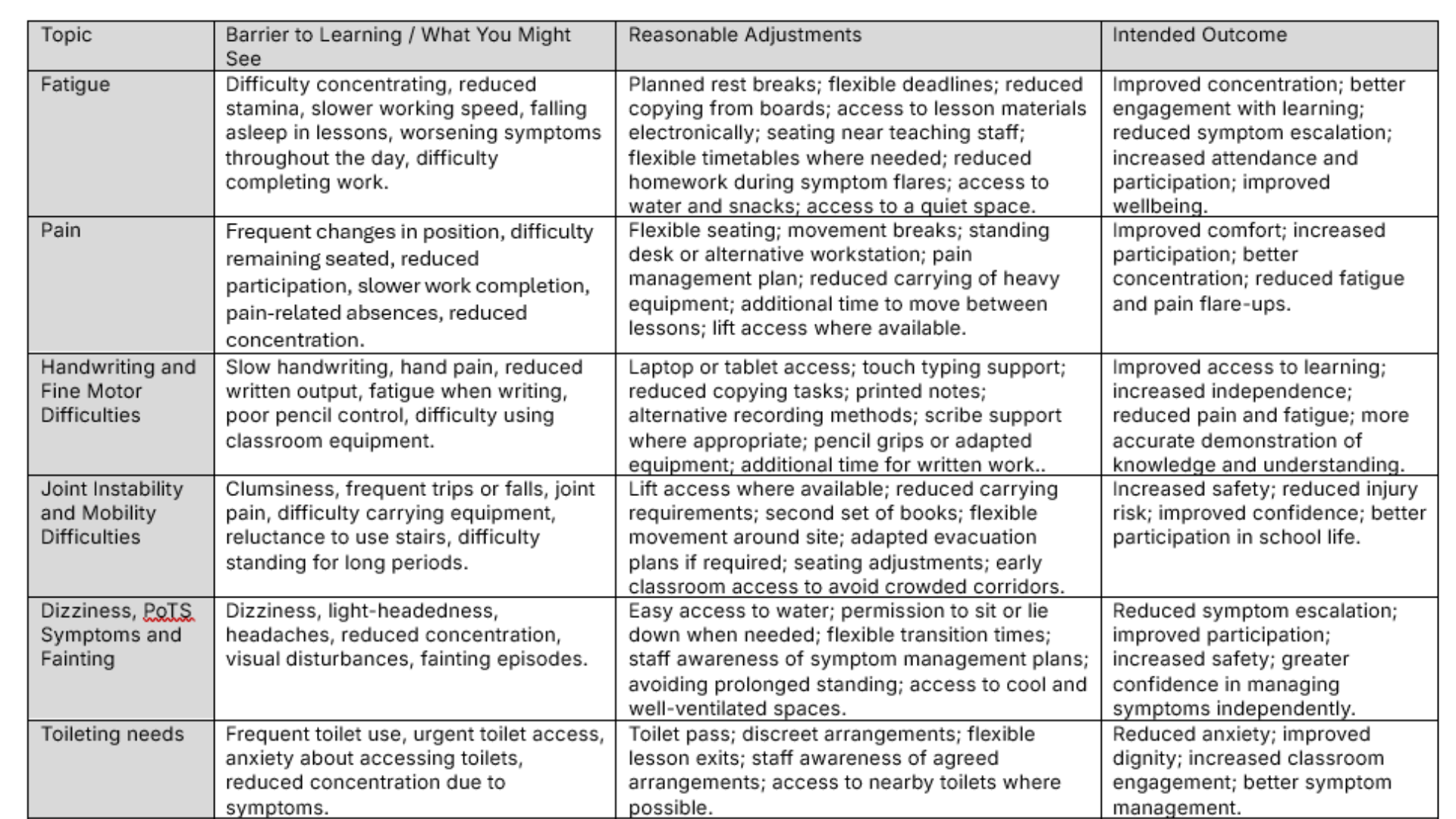
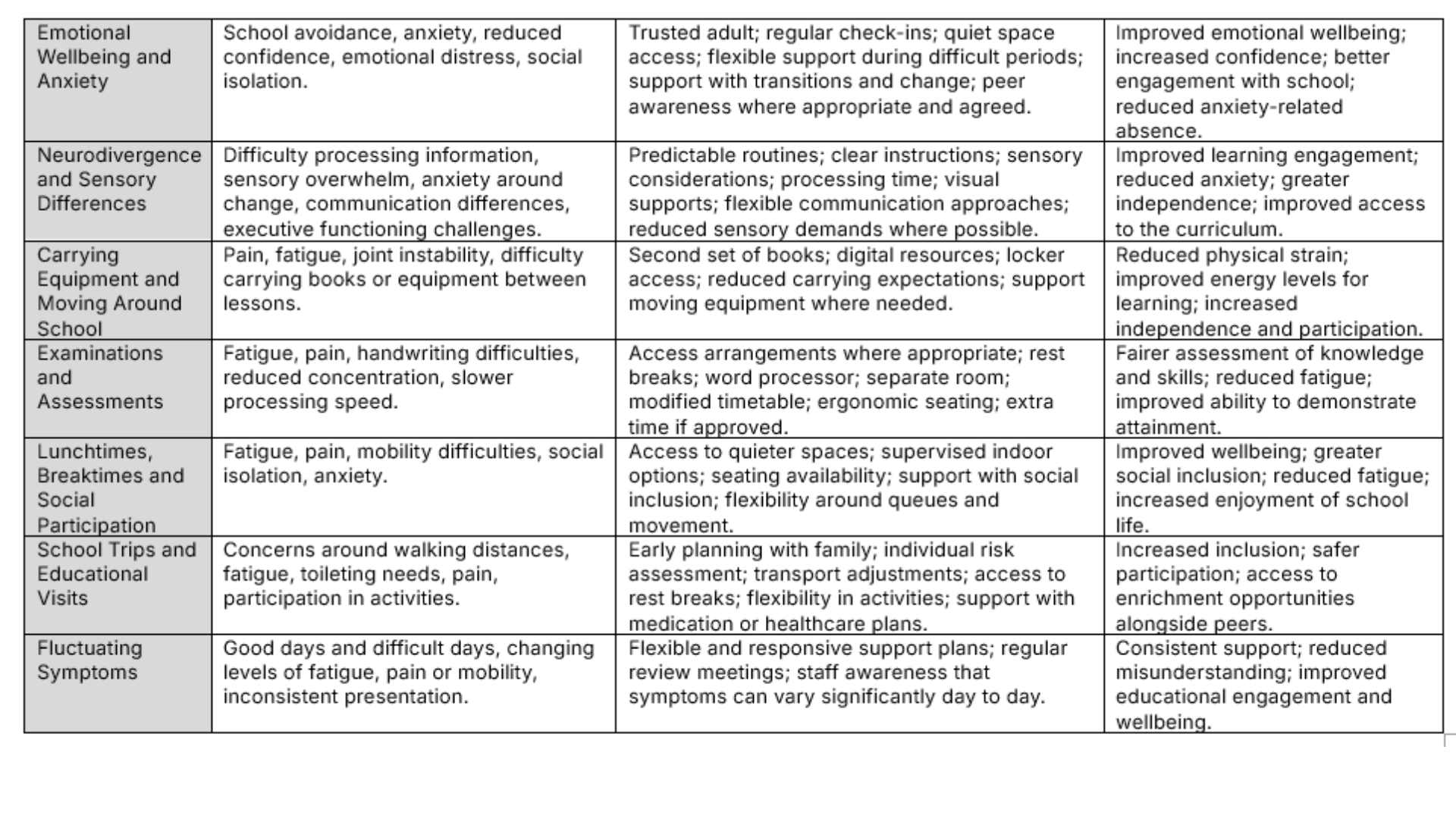
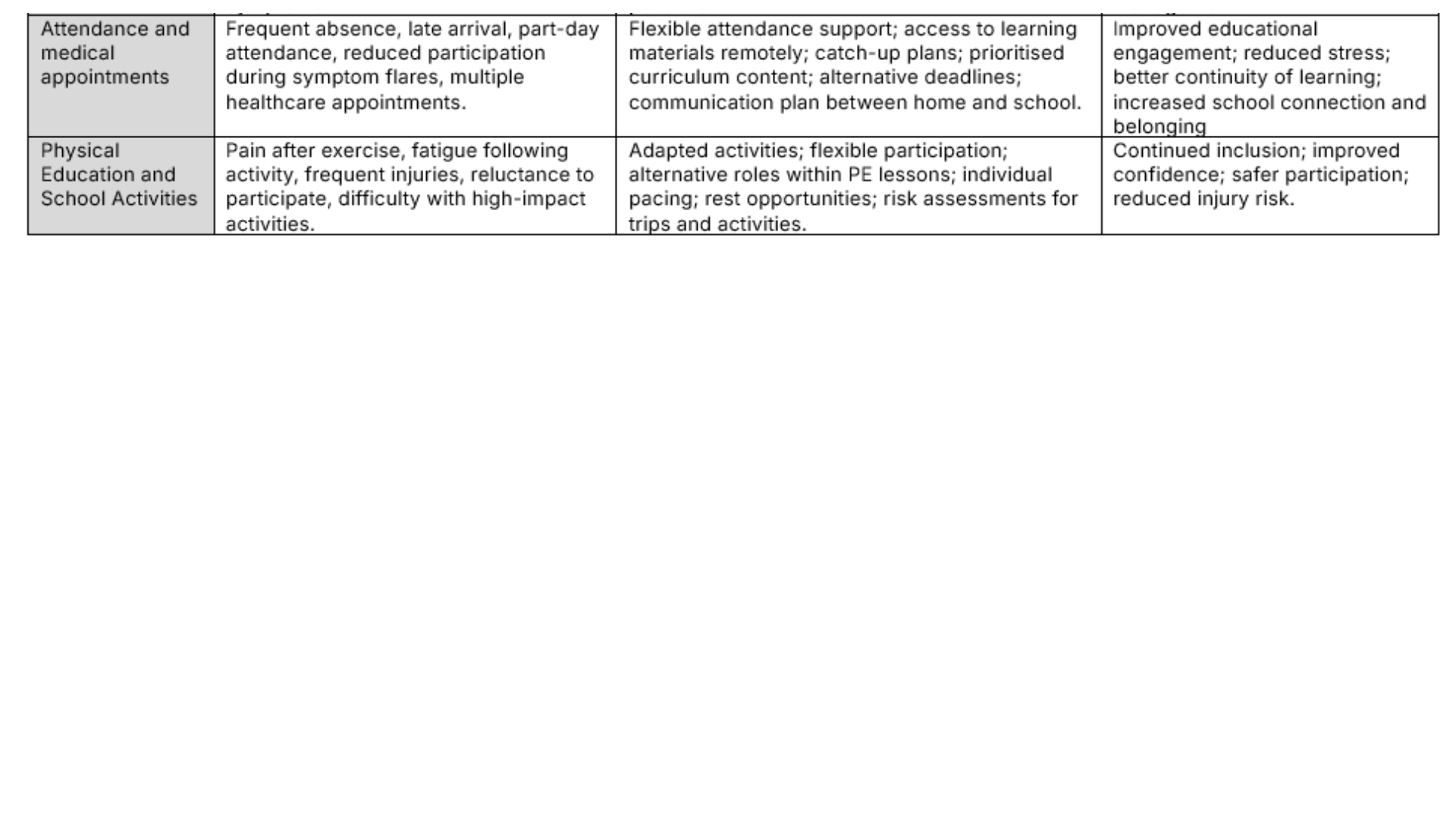
This resource is designed to help schools identify common barriers to learning, consider practical adjustments, and understand the outcomes those adjustments may support. Not every adjustment will be appropriate for every pupil. Support should always be individualised and developed in partnership with the pupil, family and relevant healthcare professionals.
At a glance
Many pupils with EDS or HSD may experience:
- Fatigue
- Pain
- Joint instability
- Difficulties with handwriting and fine motor skills
- Dizziness or fainting
- Gastrointestinal or bladder symptoms
- Anxiety or emotional wellbeing challenges
- Difficulties attending school consistently
- Challenges participating in PE or practical activities
Many of these symptoms are invisible and may fluctuate from day to day.
Key message for schools
The most effective support is usually not complex.
Small, practical adjustments that reduce fatigue, pain, anxiety and physical demands can have a significant impact on attendance, participation, wellbeing and educational outcomes. Getting an Occupational Therapist to help with suggestions is recommended.
When schools, families and pupils work together, young people with EDS and HSD are more likely to thrive academically, socially and emotionally.
Adjustments