The Complexities of Navigating the Healthcare System as an Autistic Individual with Ehlers-Danlos Syndrome: A Patient Perspective
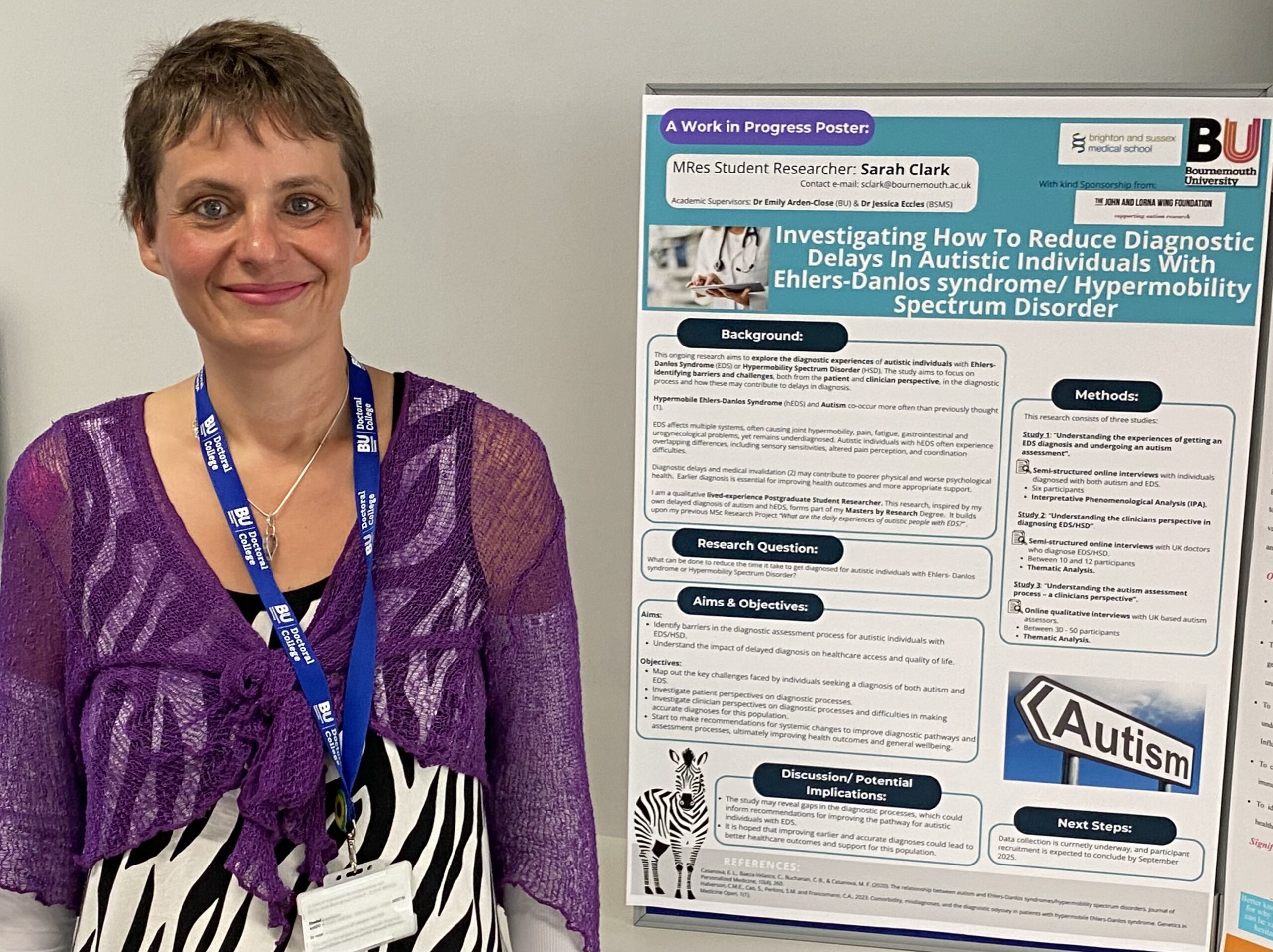
Sarah Clark is an autistic patient expert living with hEDS and has an MSc in Clinical and Developmental Psychology. She is a postgraduate researcher focusing on diagnostic delays for autistic people with EDS and HSD, and an award-winning EDI advocate, writer, and photographer. Sarah is also an Expert by Experience autism trainer and is passionate about using her own healthcare experiences to improve awareness, accessibility, and patient-centred care.
Living with a multi-systemic condition like hypermobile Ehlers-Danlos syndrome brings daily challenges. For me, these challenges are further compounded by being autistic. Both shape how I experience the world around me and how I interact with healthcare, education, and even friends and family. Since my diagnoses, I’ve learned that navigating the healthcare system with this combination requires resilience, creativity, and constant self-advocacy.
In my recent article for the Journal of Patient Experience, I reflected on how autistic people with EDS face unique hurdles – diagnostic delays, misdiagnoses, and systemic barriers – all stemming from limited awareness among clinicians. Here, I want to share a more personal perspective: what it feels like to move through a system that was never designed with bodies or minds like mine in mind.
Living in Two Worlds at Once
EDS and autism are both under-recognised, but in different ways. With EDS, symptoms like fatigue, pain, and frequent injuries are often dismissed or misunderstood, leading to delayed diagnosis. With autism, sensory and communication differences can make even everyday conversations overwhelming. Together, they create a “double complexity” that many clinicians struggle to grasp.
Take something as simple as booking an appointment. It means phoning a stranger, waiting in a queue with distorted hold music, and trying to summarise a complex medical issue in under a minute so the receptionist will schedule you in for an appointment. For someone with executive function and processing differences, this first hurdle can feel almost impossible.
Then comes the waiting room – bright lights, multiple people talking, radios playing, buzzing snack machines, children fidgeting – all of which can trigger sensory overload before you even see a doctor. Then when you finally sit down in the consultation, you may struggle to explain the unpredictable nature of your symptoms. Your brain races to keep up, while your body quietly screams with pain. Many autistic people also mask (suppressing visible signs of distress to (‘fit in’) often without realising it. Masking can hide how unwell you really are, which means doctors may underestimate your pain unless they ask specific, concrete and literal questions.
Sometimes, it’s only afterwards, when I replay the appointment over and over, that I realise how invalidating the experience felt. It can take days to recover from just one short consultation, not only physically but emotionally, too. And yet the system rarely sees this hidden cost.
The Long Road to Diagnosis
Receiving my hEDS diagnosis – after about fifteen years of physical symptoms being dismissed – was both validating and bittersweet. By then, I had spent so long questioning myself due to others not believing me, that the diagnosis felt like both an answer and a reminder of lost time.
My autism diagnosis came later, in adulthood at 37. Before that, I spent years in mental health services under incorrect labels, including Emotionally Unstable Personality Disorder (EUPD). This misdiagnosis further delayed my hEDS recognition, as it damaged my credibility—hospital doctors dismissed my physical symptoms as psychological.
Looking back, I can see how being autistic shaped the way I communicated about pain, fatigue, and medical uncertainty. Yet this was rarely recognised by clinicians. And I know my story isn’t unique. Many autistic people with EDS describe the same pattern of disbelief, misdiagnosis, and exhausting self-advocacy.
The Emotional Toll
The emotional impact of this prolonged journey should not be underestimated. Constantly justifying symptoms, or explaining why I cannot tolerate certain treatments or environments, takes its toll. For autistic people, who often find structure, predictability, and clear communication essential, the uncertainty and fragmentation of the NHS can be particularly distressing.
There is grief; for the years lost, the opportunities missed, and the energy spent navigating rather than healing. But there is also resilience. Over time, I’ve learned to prepare carefully for appointments, bring written notes, wear a sunflower lanyard, and ask for reasonable adjustments. These small strategies reduce the cognitive load of healthcare interactions and help me feel more grounded.
Finding What Helps
Despite the challenges, I’ve found ways forward. Pacing, planning, and scheduling “recalibration breaks” allow me to balance limited energy. Routine and predictability ease anxiety around appointments. Sensory accommodations – like quieter waiting areas or written summaries – make a huge difference.
Peer support has been invaluable, too. Connecting with others who share lived experience reduces isolation and provides practical tips and encouragement. Through Ehlers-Danlos Support UK, I’ve discovered adaptive gadgets, pacing strategies, and the reassurance of community.
Clinicians who are open-minded and willing to learn also make a profound difference. The best experiences have been with professionals who took time to listen, offered clear explanations, and validated both my physical symptoms and my autistic needs. One memory that stays with me is my GP who simply sat and held my hand while I cried in pain and frustration. That moment of being seen and heard helped rebuild trust.
What Needs to Change
In my published article, I advocate that three things are urgently needed to improve care:
- Improved clinician education – Many healthcare professionals remain unaware of the overlap between autism and EDS. Training that highlights these intersections could prevent misdiagnoses and reduce delays.
- Holistic, patient-centred communication – Consultations should include time for clear explanations, opportunities for questions, and written follow-up. Communication is not just efficiency; it’s about dignity, understanding, and two-way dialogue.
- Collaborative care models would make the system far less exhausting to navigate.
These changes may sound ambitious, but they are achievable. Small adjustments such as longer appointments, sensory accommodations and patient-held care plans, could transform the experience of care.
Looking Forward
Sharing stories is about more than catharsis. It raises awareness, drives change, and helps others feel less alone. Every time I share my experience, I hope it helps clinicians, policymakers, and fellow patients to see the bigger picture.
Yes, navigating the healthcare system as an autistic person with EDS is complex. It can feel like running an obstacle course while already exhausted. But it is also possible to carve out moments of regulation, safety, compassion, and empowerment.
By listening to patients, valuing lived expertise, and making small, practical adaptations, the system can become more accessible. My hope is that, in time, autistic people with EDS will no longer face the same prolonged struggles I did. Instead, they will encounter a healthcare system ready to meet them with knowledge, respect, and care.