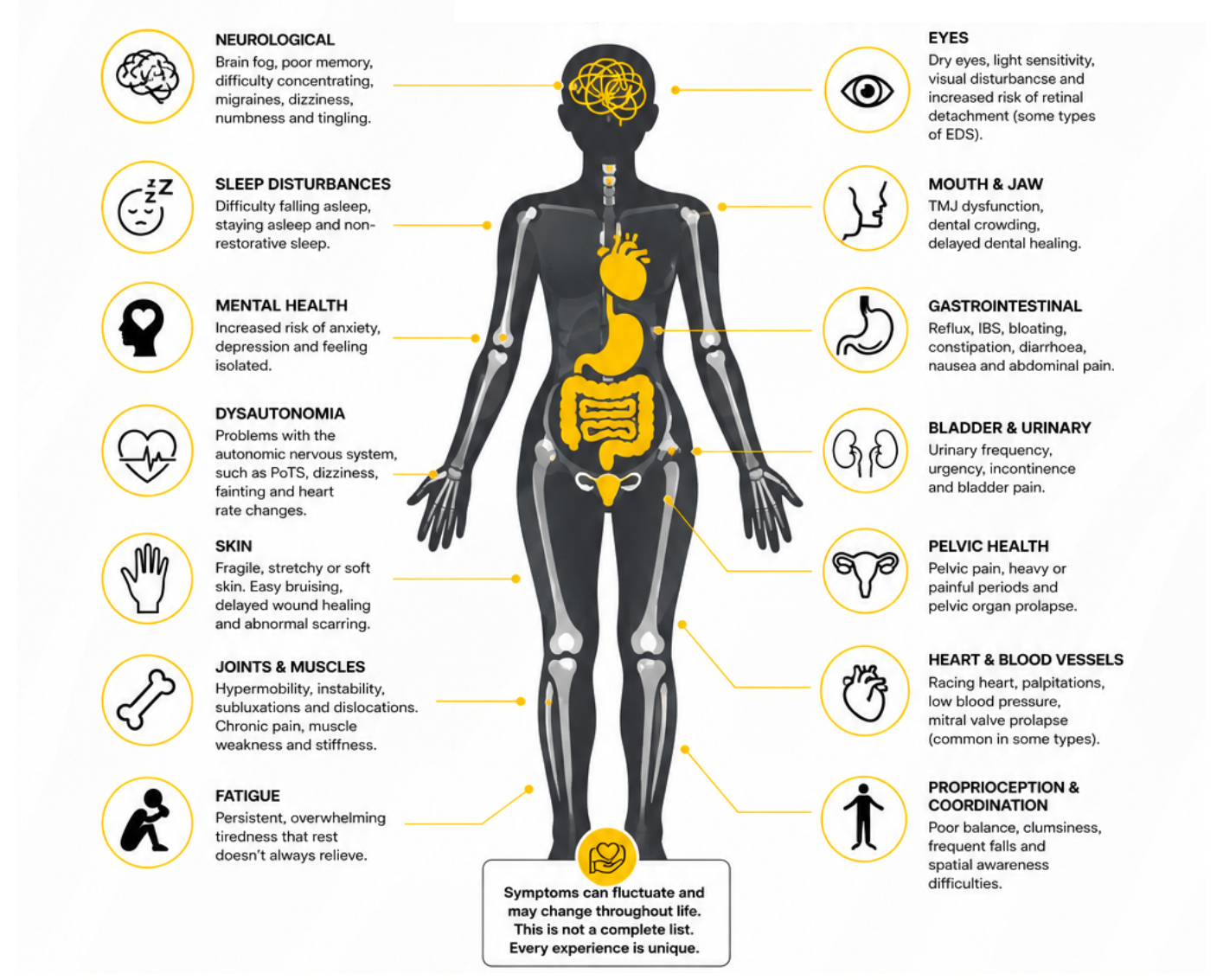
Ehlers-Danlos syndromes (EDS) and Hypermobility Spectrum Disorders (HSD) are connective tissue disorders that can affect many parts of the body. Although symptoms vary greatly between individuals, joint hypermobility is a common feature. This can lead to frequent sprains, dislocations, subluxations (partial dislocations), joint instability, and chronic musculoskeletal pain.
Many people with EDS and HSD experience significant fatigue that is not relieved by rest and can impact daily activities. Soft tissue injuries, slow recovery from exercise, and muscle weakness are also common. Skin symptoms are more prominent in some forms of EDS and may include unusually soft, stretchy, fragile, or easily bruised skin, as well as poor wound healing and abnormal scarring.
EDS and HSD can affect more than just the joints and skin. Some individuals experience gastrointestinal problems such as reflux, bloating, constipation, and abdominal pain. Cardiovascular symptoms, including dizziness, palpitations, and fainting related to autonomic dysfunction, may also occur. Headaches, migraines, and difficulties with concentration or memory are frequently reported.
The severity and combination of symptoms differ from person to person. While some individuals experience mild effects, others may face significant challenges affecting mobility, education, employment, and overall quality of life. Early recognition, appropriate management, and multidisciplinary support can help improve outcomes and daily functioning.