
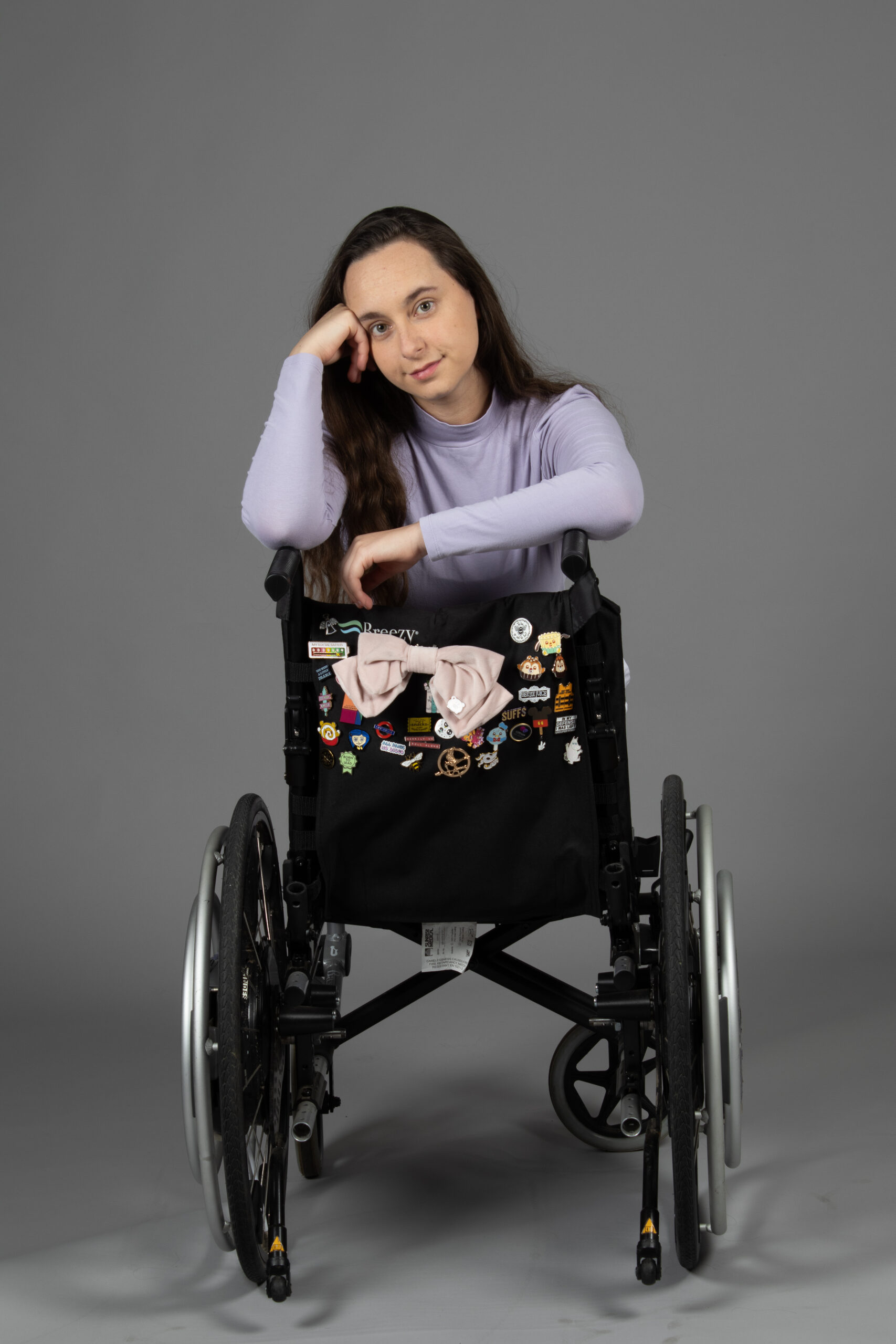
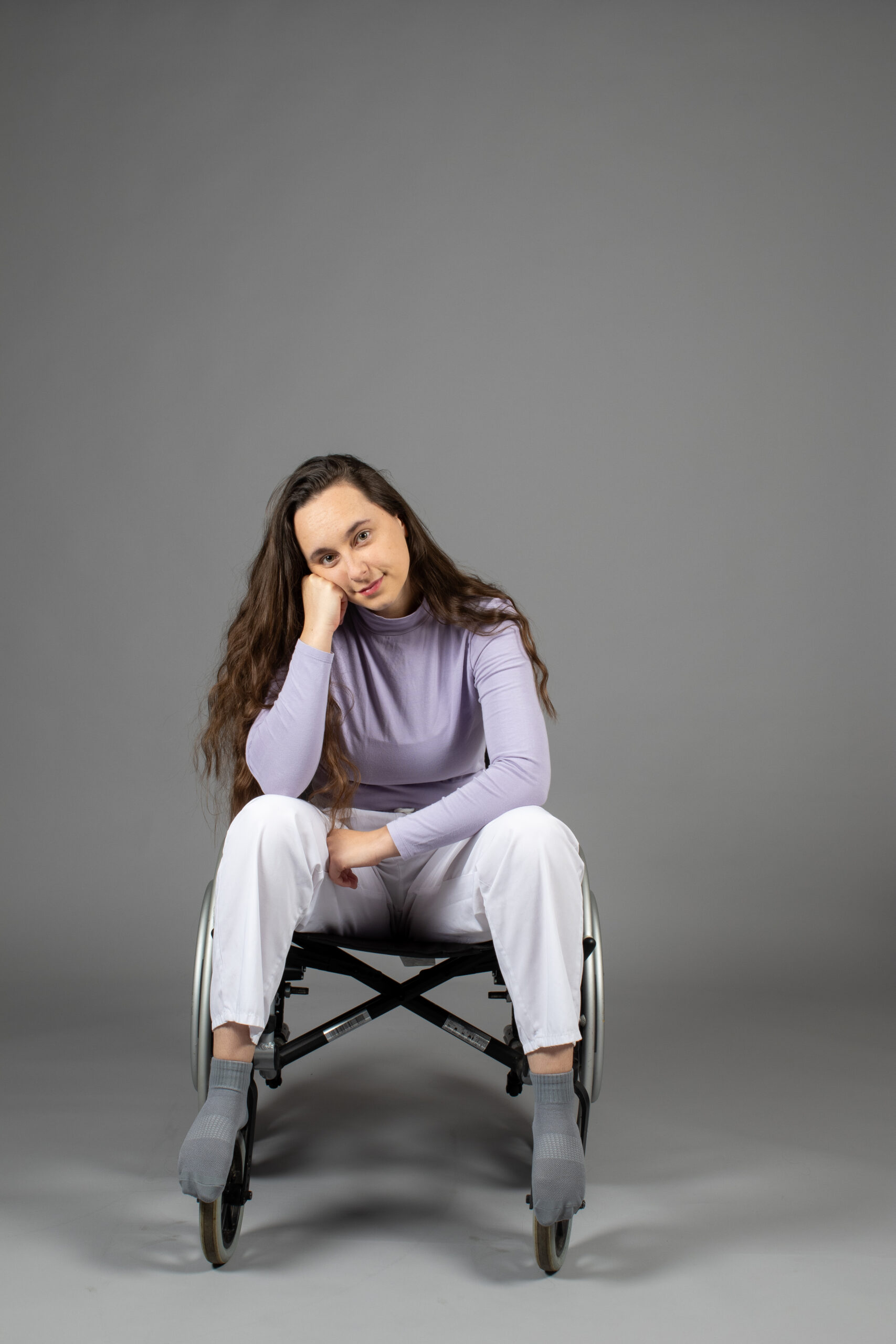
My story – Katie
My name is Katie Anna (she/her) and I have recently celebrated my 21st birthday – this is my EDS story:
I have always been an active person, and was part of multiple sports teams during childhood. There were never any health concerns when I was younger, and none of my family had hereditary conditions (or so we thought)! My passion for fitness continued – specifically in performing arts – so I began to train more regularly.
With classes almost every day, and concurrently excelling in school, I began to experience burnout. When I then hit high school and puberty simultaneously, more issues started to arise.
As many people with EDS, I have other disabilities, too. The first one to rear its head was what we now know to be endometriosis, but at the time was dismissed as ‘period problems’. In the same year, I started complaining about pain in my right knee – initially labelled as patella tendonitis by a sports physio. I feel very lucky to have had immediate access to this professional, however it did mean that further assessment was delayed as we thought we had an answer to the problem. In hindsight, this was my first time subluxating a joint, and continued to use it normally despite the lack of treatment or support.
When my elbow started clicking every time I moved, or feeling bruised and presenting with a large gap in the middle, we didn’t even consider this might be related to my knee, and instead thought it may be due to the extensive writing required now I had started GSCEs. A quick visit to the doctor and I was on a referral list for MSK, and in the short time I was waiting for that appointment, my back aches became almost unbearable.
Up until that point, we had considered these to be typical of teenage girls who dance so often and are still developing physically. At the specialist, however, we learnt that I was hypermobile – NOT very flexible though. In fact, it was great to have some answers about why I struggled so much with the acrobatic sections of my routines; even though my joints seemed to have a higher than usual range of motion, my muscles certainly didn’t.
The doctor was great and explained it all clearly, and put me on course for a weekly physiotherapy plan… To tell a long story short, this didn’t help as much as we had hoped, and so I tried more medication and started using splints and supports. After my exams, I decided to attend drama school full time (although none of my care team particularly advised this!) and I experienced a flare like never before. 8 months into my course, the Covid pandemic hit and I quickly went from occasionally relying on a walking stick to being a full time wheelchair user with a power assist adaptation! To find more details about each of these elements, visit my other posts *insert link here*.
Nearly 8 years later my diagnosis has changed from JHS (now known as HSD) to EDS after nurses found that one of my family members met the criteria for this condition, and so it could have been passed to me genetically.
Managing your health – ideas and tips
Managing health with EDS requires strategic planning and comes with a fair amount of challenges. Especially as a young person and approaching the summer months, FOMO can hit hard and it is tricky watching others your age enjoy the sunshine and make the most of the long days if this isn’t something you are able to participate in. This is one reason holidays can feel exclusive for disabled people and is why it’s important to have as many coping mechanisms in place as possible!
One essential strategy is scheduling rest days as diligently as you would work shifts. This ensures you prioritise self-care, and treating rest time as non-negotiable helps manage the unpredictable nature of fluctuating conditions like EDS.
Maintaining a balance between activity and recovery can be hard, but there are loads of apps available to help track your spoons and symptoms. By using these tools, you can visualise your energy expenditure, plan accordingly, and avoid overexertion. This can also help make informed decisions about your daily routine and learn how to conserve energy for essential tasks.
Setting boundaries is also vital, and having an access rider can be a game-changer. This document outlines your needs and preferences, ensuring that employers or educators understand your limitations and provide necessary support. It’s a consistent reminder to respect your health requirements and fosters a supportive and accommodating environment.
Finding what works best for you often involves trial and error, as everyone’s experience with EDS is unique, and discovering effective strategies may take time. Be patient and open to experimenting with different things, whether it’s specific therapies, lifestyle changes, or assistive devices.
Lastly, adopting proactive solutions rather than reactive ones is key. Don’t wait for problems to escalate before addressing them – which people often do because they don’t feel ‘disabled enough’ to need the help in question. Preventative measures are just as (if not more) important! You can get creative with these and my general rule is ‘if it’s stupid and it works, then it’s not stupid’.
Young Carer
Being a young carer when you are disabled yourself is a topic I don’t often see addressed. It is a delicate balancing act, often filled with complex emotions and responsibilities, and can be emotionally and physically exhausting.
The dynamics of each household where more than one person has access requirements will look different every time, however there are some universal experiences that most chronically ill young carers may relate to:
- Feeling like a burden to your own caregiver if they have multiple dependants.
- Minimising your own needs to prioritise the person you care for (when this is likely to cause more issues down the line, because if you’re not looking after yourself properly you will not have the tools or capacity to do so for anyone else).
- Trouble enforcing authority or setting boundaries when the person you care for sees you struggling.
- Defending your role to others, especially when being a minor using a ‘carer’ ticket at events.
- People often questioning your capability and legitimacy, not realising the depth of your commitment and the toll it takes on your health.
Finding time for yourself where possible, having friends that face similar challenges, and sharing any difficulties is always the best way forward. A problem shared is a problem halved, and things can and will get easier, no matter how hard they might seem.
Neurodiversity and EDS
Being neurodivergent and having EDS simultaneously presents unique barriers.
For example, communicating with neurotypical doctors can be difficult, especially when trying to use tools like the 1-10 pain scale, as my brain just does not think like that and so I can’t give a helpful answer.
This leads to self-doubt and wondering whether what I’m experiencing is actually normal and nothing to be worried about, as I don’t feel the same as other people a lot of the time anyway. For example, my need to comprehend instructions explicitly leads to me asking a lot of questions, which is then called ‘attention seeking’ – is wanting to understand what’s happening to my body the same and I’m actually just catastrophizing?
This is a common trait of neurodivergent people but can be labelled as ‘hypochondria’ and therefore not taken seriously. I feel that masking can also add to this anxiety as we are having to concentrate on so many things at once like our facial expressions, responses, tone of voice etc. (to meet societal standards) when really none of that should matter and we should be prioritising the pain we are in and finding a solution to it.
It took a while to join these dots, but it’s important to remember that my neurodivergency and EDS are both invisible disabilities.